
What Is an eSIM and why do more phones use it now?
An eSIM is a digital SIM built into your phone. Instead of inserting a plastic SIM card, you download a cellular plan to your device and connect to the network.
Think of it like this:
- Physical SIM: a removable chip you insert
- eSIM: a digital profile you install (no shipping, no tiny card)
How an eSIM works
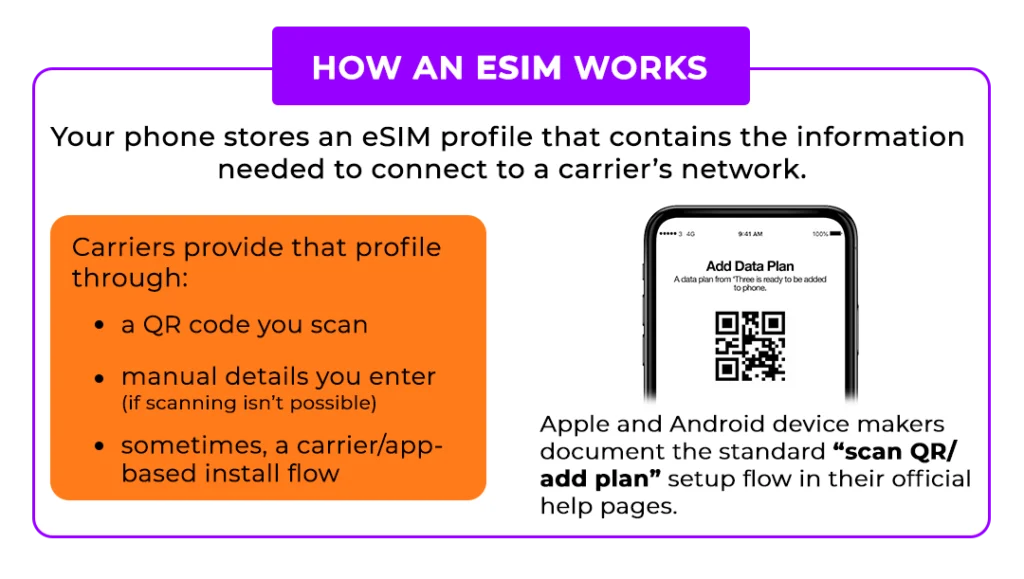
Your phone stores an eSIM profile that contains the information needed to connect to a carrier’s network.
Carriers provide that profile through:
- a QR code you scan
- manual details you enter (if scanning isn’t possible)
- sometimes, a carrier/app-based install flow
Apple and Android device makers document the standard “scan QR / add plan” setup flow in their official help pages.
Why People Choose eSIM Plans
Top benefits shoppers care about:
- Instant setup (no waiting for shipping)
- Great for dual lines (work + personal, or backup line)
- Less hassle (no SIM swapping, no lost cards)
- Easier plan changes when switching carriers (in many cases)
eSIM vs Physical SIM: which is better?
Choose eSIM if you want:
- Fast activation
- Fewer moving parts
- A clean dual-line setup (device-dependent)
Choose a physical SIM if you:
- Swap phones constantly
- Want a removable backup
SpeedTalk also explains these tradeoffs and positions eSIM as the “instant activation” option.
What You Need Before You Buy an eSIM Plan
- An eSIM-compatible phone (click here to check our compatibility list)
- Device must be unlocked
- Reliable Wi-Fi during install (for downloading the eSIM profile)
Common eSIM Myths
- “eSIM means no phone number.” False. Your eSIM can have a full phone number.
- “eSIM is only for travel.” False. Many people use eSIM daily for prepaid plans, backups, and dual lines.
- “If I delete my eSIM I’m fine.” Sometimes. Deleting can remove the plan profile, and you may need a replacement from the carrier.